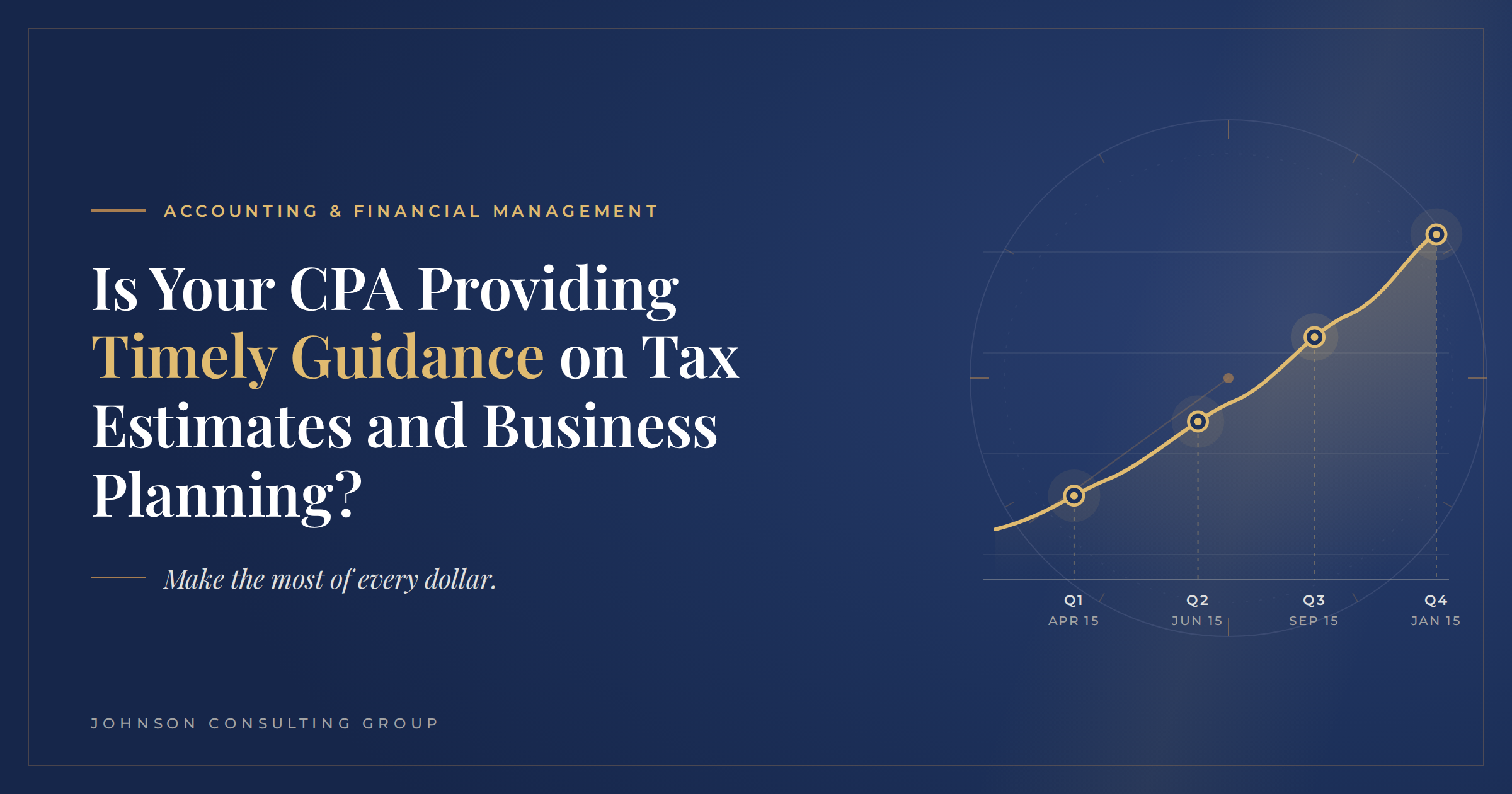
The September 15 estimated tax deadline has passed. For most funeral home owners, that leaves one 2026 payment, due January 15, 2027, or December 15 for C corporations. It also leaves about 14 weeks to make planning decisions that can change what you owe.
Many owners base their quarterly estimates on last year’s return. That can protect you from an underpayment penalty, but it doesn’t answer the question that matters most:
What will I actually owe for 2026, and will I have the cash ready?
What Has Changed Since Last Year?
Think about the past nine months. Has your call volume or cremation mix shifted your margins? Have you replaced a coach or fleet vehicle, opened a location, or acquired another firm? Any of these can move your 2026 tax bill well away from last year’s.
The prior-year approach also has a catch. If last year’s adjusted gross income exceeded $150,000, you generally need to pay 110% of last year’s tax, not 100%, to stay within the safe harbor. Even then, a strong year can leave a large balance due in April. If income is down, paying 90% of your current-year tax may be enough. That could keep cash in your business instead of sitting with the IRS and your state until you file.
Questions to Ask Your CPA
- Have you reviewed our 2026 results and projected our federal and state taxes?
- How much should we set aside for the final payment and for April?
- How will an acquisition, expansion, or potential sale affect our tax outlook?
- What decisions should we make before December 31?
If your CPA hasn’t raised these questions, we will.
Why Acting Before Year-End Matters
Current tax law allows full, immediate expensing of qualifying equipment and property placed in service during the year. A planned vehicle or facility purchase completed by December 31 may reduce your 2026 tax. The same purchase made in January would not. Timing matters in the other direction too. If you’re considering an acquisition, whether it’s structured as an asset or stock purchase, and how the price is allocated, will shape your taxes for years. Those conversations are most valuable before contracts are signed.
For owners of S corporations and partnerships, remember that estimated payments usually come from your personal cash, often through distributions. Planning the business’s cash flow and your personal tax payments together keeps either one from coming as a surprise.
Make the Review Useful
Bring your year-to-date financial statements, a record of estimated payments made, and your plans for the rest of the year. Tell your advisor about significant purchases, ownership changes, and major changes in your personal income. Ask for a projection that shows your expected tax bill and the cash needed for the final payment. Revisit it if your results or plans change.
At Johnson Consulting Group, our Tax Department works alongside your funeral home accountant and business consultant to connect tax planning with cash flow and growth plans. That way, your estimates reflect where your business is headed, not where it was a year ago.
Make the most of the final quarter. Reach out today to schedule your 2026 tax projection by November 15th to leave time for year-end decisions.
This article is for general information only and is not tax advice. Please consult your tax advisor about your specific situation.
Contact JCG Today